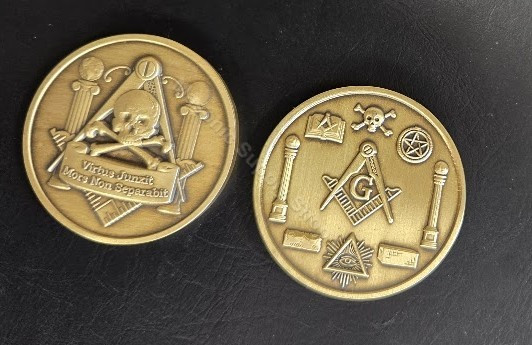
Challenge coins began in military units, where members carried a coin to prove membership. The custom has spread to many organisations, and Masonic challenge coins are now common in lodges across North America.
What is a Masonic challenge coin?
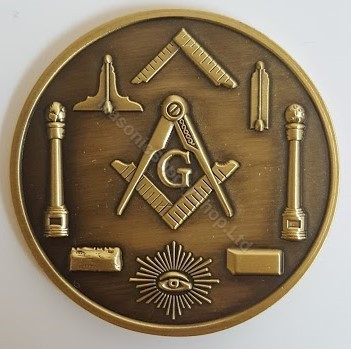
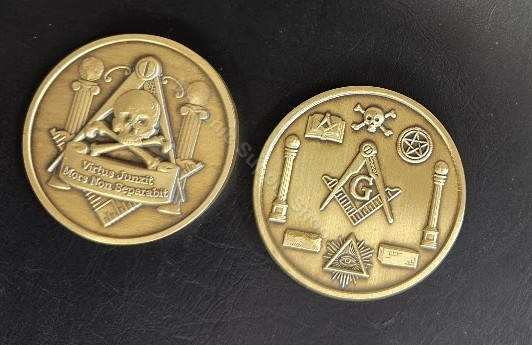
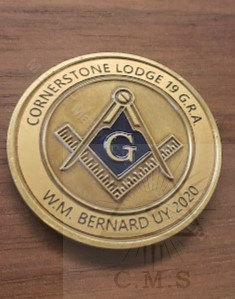
A Masonic challenge coin is a medallion, usually metal and around 4 cm across, bearing Masonic emblems and often a lodge's name and number. Brethren carry them, present them and collect them.
Types of coin
- Lodge coins with the lodge's name, number and founding year.
- Grand Lodge coins issued by a Grand Master during his term.
- Appendant body coins for Chapters, Councils, Commanderies, Valleys and Shrine Temples.
- Event coins marking anniversaries, cornerstone layings or conventions.
The coin check
In the challenge-coin tradition, one member challenges others to produce their coin; those without one traditionally buy the next round of refreshments. Lodges adapt the custom in their own way, often with a lighthearted charity donation instead.
Designing a coin for your lodge
- Include the lodge name, number and location.
- Add the Square and Compasses and perhaps a local symbol.
- Keep fine detail to a minimum; it can be lost at coin size.
- Approve a proof carefully before production.
- Order enough for current members, future initiates and visitors.
Presenting coins
Many Masters present a lodge coin to visiting dignitaries, new Master Masons and Brethren who help the lodge. A brief handshake presentation is customary in some circles.
Collecting and displaying
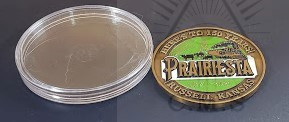
Coin capsules, albums and display cases keep coins in good condition. Handle them by the edges and store them away from damp.
Coins as fundraisers
Lodges sometimes sell their coin to members and visitors, with proceeds going to the lodge's charity. A limited run for an anniversary can become a sought-after collectible.
Coins for officers
Some Masters present a special coin to each of their officers at the end of the year as a thank-you for their service, often with the year engraved.
Ordering coins for a lodge
Plan the design early, agree the number of coins with the lodge, and allow time for proofs and production. Custom coins usually have a minimum order, so it often makes sense to order enough for several years of new members.
Storing coins
Keep coins in capsules or a padded case, away from damp. Handle them by the edges to protect enamel and plating.
See Masonic coins at Masonic Supply Shop, or return to our guide to Masonic products for collectors.